Automotive Technology Evolution: From Manual Windows to Smart Car Integration
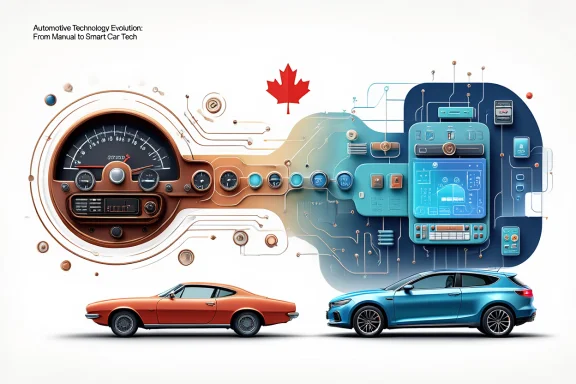
Remember when the most advanced technology in your car was an AM/FM radio and maybe power windows? If you’re old enough to recall manually cranking windows down on Highway 401 during a summer traffic jam, you’ve witnessed one of the most dramatic technological transformations in human history.
Today’s average Canadian vehicle contains more computing power than the spacecraft that landed on the moon. A modern Honda Civic has over 100 electronic control units managing everything from engine timing to seat positioning. Yet this evolution didn’t happen overnight – it’s been a steady march of innovation driven by safety regulations, consumer demands, and technological breakthroughs that fundamentally changed how we interact with our vehicles.
Understanding this evolution helps explain why modern automotive electronics are so sophisticated, why professional installation matters more than ever, and where the industry is heading next. Let’s take a journey through five decades of automotive technology that transformed Canadian driving from a mechanical experience to a digital lifestyle.
The Mechanical Era (1970s-1980s): When Cars Were Simple
The Baseline: Pure Mechanical Function
In the 1970s, Canadian car buyers expected basic transportation with minimal electronic interference. The typical family car – perhaps a Chevrolet Impala or Ford LTD – relied almost entirely on mechanical systems that owners could understand and often repair themselves.
Standard 1970s Vehicle Features:
- Manual windows operated by hand cranks
- Mechanical door locks with physical keys
- Basic AM radio (FM was considered premium)
- Carburetor fuel systems with manual chokes
- Points-based ignition systems requiring regular adjustment
Early Electronic Pioneers
Even in this mechanical age, forward-thinking manufacturers began introducing electronic components that would eventually revolutionize the industry:
Breakthrough Technologies:
- Electronic ignition systems (mid-1970s) eliminated points and condensers
- Digital clocks appeared as luxury features in premium vehicles
- Basic stereo systems with cassette players became popular options
- Rudimentary cruise control used vacuum and mechanical systems
Canadian Market Adoption: These early electronic features spread slowly across the Canadian market. Cold climate concerns about electronic reliability meant conservative adoption rates, with many buyers preferring proven mechanical systems over newfangled electronics.
The Regulatory Catalyst
Government regulations in both Canada and the United States began driving technological advancement. Emission standards required more precise fuel management than carburetors could provide, setting the stage for electronic fuel injection adoption.
Key Regulatory Drivers:
- Emission control requirements necessitated precise fuel/air mixture management
- Safety standards began mandating features like seat belt warning systems
- Fuel economy regulations encouraged development of electronic engine management
- Cold weather performance standards influenced Canadian-specific adaptations
The Electronic Revolution (1980s-1990s): Digital Integration Begins
Microprocessors Enter the Mainstream
The 1980s marked automotive electronics’ coming-of-age period. Microprocessors became affordable enough for automotive applications, enabling sophisticated engine management systems that improved performance, fuel economy, and emissions compliance.
Revolutionary 1980s Innovations:
- Electronic fuel injection replaced carburetors across most vehicle lines
- Anti-lock braking systems (ABS) prevented wheel lockup during emergency stops
- Electronic climate control provided precise temperature management
- Digital dashboards displayed vehicle information on LCD screens
Consumer Electronics Integration
As VCRs and personal computers entered Canadian homes, automotive manufacturers began integrating similar technologies into vehicles. This period saw the first attempts at making cars entertainment and information centers rather than just transportation.
Entertainment Evolution:
- Premium sound systems with equalizers and multiple speakers
- CD players gradually replaced cassette decks
- Power seats with memory functions for multiple drivers
- Automatic headlights that responded to ambient light conditions
Canadian-Specific Adaptations
Canada’s harsh climate drove unique technological adaptations that influenced global automotive design:
Cold Climate Innovations:
- Block heaters became standard equipment in Prairie provinces
- Remote engine starters emerged as aftermarket solutions for extreme cold
- Enhanced battery management systems for cold weather reliability
- Improved cold-start fuel injection programming for Canadian conditions
The Safety and Convenience Era (1990s-2000s): Technology Becomes Essential
Airbags and Electronic Safety Systems
The 1990s witnessed explosion in safety-related automotive electronics. What began with basic airbag systems evolved into comprehensive safety networks that could predict and respond to crash scenarios in real-time.
Safety Technology Milestones:
- Multiple airbag systems expanded beyond driver protection
- Electronic stability control prevented skids and rollovers
- Traction control systems managed wheel spin in adverse conditions
- Crash sensors throughout the vehicle body enabled targeted airbag deployment
Convenience Features Proliferate
As electronic systems became more reliable and cost-effective, convenience features that were once luxury items became standard equipment across vehicle lines.
Standard Convenience Features:
- Power windows and door locks eliminated manual operation
- Keyless entry systems improved security and convenience
- Automatic climate control maintained preset temperatures
- Premium audio systems with CD changers and enhanced sound processing
The OBD-II Revolution
In 1996, On-Board Diagnostics II (OBD-II) became mandatory on all vehicles sold in North America. This standardization revolutionized vehicle maintenance and repair while enabling sophisticated emissions monitoring.
OBD-II Impact:
- Standardized diagnostic procedures across all manufacturers
- Real-time emissions monitoring and reporting
- Enhanced troubleshooting capabilities for technicians
- Foundation for future connected vehicle technologies
The Connected Era (2000s-2010s): Integration and Communication
Infotainment Systems Emerge
The 2000s brought the convergence of automotive transportation with personal electronics. Cell phones, GPS navigation, and internet connectivity began integrating with vehicle systems, creating the modern infotainment experience.
Infotainment Evolution:
- GPS navigation systems eliminated paper maps and route planning
- Bluetooth connectivity enabled hands-free phone calls and audio streaming
- Satellite radio provided hundreds of channels across Canada’s vast distances
- USB ports and auxiliary inputs connected personal devices to vehicle audio
Advanced Driver Assistance Systems (ADAS)
Safety technology evolved beyond crash response to crash prevention. Advanced Driver Assistance Systems began taking active roles in vehicle operation, setting the foundation for autonomous driving development.
ADAS Innovations:
- Adaptive cruise control maintained following distances automatically
- Lane departure warning alerted drivers to unintentional lane changes
- Parking assistance systems guided vehicles into tight spaces
- Blind spot monitoring warned of vehicles in adjacent lanes
Smartphone Integration Revolution
The iPhone’s 2007 launch and subsequent Android development fundamentally changed consumer expectations for in-vehicle technology. Suddenly, automotive infotainment systems competed directly with handheld devices.
Smartphone Integration Milestones:
- Apple CarPlay (2014) brought iOS interface to vehicle screens
- Android Auto (2015) provided similar integration for Android users
- App ecosystems expanded vehicle functionality beyond manufacturer limitations
- Over-the-air updates enabled continuous feature improvements
The Smart Car Era (2010s-Present): Vehicles Become Computers on Wheels
Electric Vehicle Technology Acceleration
Electric vehicles (EVs) accelerated automotive electronics advancement by necessitating sophisticated battery management, regenerative braking, and energy optimization systems that traditional internal combustion engines never required.
EV-Driven Technologies:
- Battery management systems optimize charging and performance
- Regenerative braking recovers energy during deceleration
- Thermal management systems protect batteries in Canadian winters
- Charging system integration with home and public infrastructure
Autonomous Driving Development
Self-driving technology development pushed automotive electronics to unprecedented sophistication levels. Modern vehicles contain sensor arrays, artificial intelligence processors, and communication systems that enable semi-autonomous operation.
Autonomous Technology Components:
- Camera systems provide 360-degree visual awareness
- Radar sensors detect objects in all weather conditions
- Lidar technology creates detailed 3D environmental maps
- AI processing units make split-second driving decisions
Vehicle-to-Everything (V2X) Communication
Modern vehicles communicate not just with their occupants but with infrastructure, other vehicles, and cloud-based services. This connectivity enables new safety features, traffic optimization, and personalized services.
V2X Communication Applications:
- Traffic light coordination optimizes signal timing for approaching vehicles
- Emergency vehicle alerts warn of approaching ambulances and fire trucks
- Weather and road condition sharing improves safety through real-time updates
- Parking space availability guides drivers to open spots in busy urban areas
Canadian Adoption Patterns and Regional Variations
Climate-Driven Technology Preferences
Canada’s diverse climate zones influenced technology adoption patterns differently across the country. Features essential in Yukon winters might be irrelevant in Vancouver’s mild coastal climate.
Regional Technology Priorities:
- Prairie Provinces: Remote starters, block heaters, and cold weather performance features
- Maritime Provinces: Corrosion-resistant electronics and humidity management systems
- Northern Territories: Extreme cold weather adaptations and satellite communications
- Urban Centers: Traffic management systems and parking assistance technologies
Economic Factors in Technology Adoption
Canadian consumers have historically been more conservative in adopting new automotive technologies compared to American counterparts, influenced by economic factors and climate reliability concerns.
Adoption Pattern Analysis:
- Luxury features typically appear 2-3 years later in Canadian base models
- Safety technologies adoption accelerated by government mandates
- Cold weather technologies adopted faster in Canada than other markets
- Connected services limited by cellular coverage in rural areas
Future Trends: The Next Decade of Automotive Innovation
Artificial Intelligence Integration
AI integration will transform vehicles from reactive systems responding to driver inputs into proactive partners that anticipate needs and optimize experiences automatically.
Emerging AI Applications:
- Predictive maintenance scheduling service before problems occur
- Personalized climate control learning occupant preferences
- Route optimization based on real-time traffic and weather data
- Driver behavior analysis improving safety through personalized coaching
5G Connectivity and Edge Computing
Fifth-generation cellular networks will enable real-time vehicle communication and cloud-based processing that current 4G networks cannot support.
5G-Enabled Capabilities:
- Real-time traffic optimization across entire urban networks
- Vehicle software updates downloading in minutes rather than hours
- Augmented reality navigation overlaying directions onto windshield displays
- Remote diagnostic analysis by manufacturer technicians
Sustainable Technology Integration
Environmental concerns and government regulations drive development of more sustainable automotive technologies beyond just electric powertrains.
Sustainability Innovations:
- Solar panel integration supplementing vehicle electrical systems
- Recycled material electronics reducing environmental impact
- Energy-efficient climate control extending electric vehicle range
- Bio-based lubricants for electronic component manufacturing
Consumer Adoption Predictions for Canadian Markets
Technology Acceptance Timelines
Based on historical adoption patterns and current development trends, several technologies are poised for mainstream Canadian adoption within the next decade.
Near-Term Adoption (2025-2027):
- Level 3 autonomous driving in highway conditions
- Vehicle-to-grid technology using EV batteries for home power
- Advanced biometric systems for personalized vehicle access
- Comprehensive health monitoring through seat and steering wheel sensors
Medium-Term Integration (2027-2030):
- Fully autonomous urban driving in major Canadian cities
- Holographic dashboard displays replacing traditional instruments
- Brain-computer interfaces for hands-free vehicle control
- Complete vehicle sharing ecosystems reducing private ownership
Regional Deployment Strategies
Technology deployment across Canada will continue reflecting regional needs and infrastructure capabilities:
Urban-First Technologies: Advanced traffic management, autonomous driving, and high-bandwidth connectivity services will deploy first in major metropolitan areas.
Rural Adaptations: Satellite-based services, extended-range communications, and self-sufficient vehicle systems will address Canada’s vast rural and remote regions.
Climate-Specific Features: Cold weather technologies will continue advancing faster in Canadian markets than temperate regions globally.
The Transformation Continues: From Transportation to Lifestyle Platform
Looking back at five decades of automotive evolution reveals an acceleration pattern that shows no signs of slowing. What began as simple mechanical transportation has evolved into mobile computing platforms that serve as extensions of our digital lives.
For Canadian drivers, this evolution has been shaped by unique climate challenges, vast distances, and diverse regional needs that continue influencing global automotive development. Features developed for Canadian winters now benefit drivers worldwide, while urban traffic management systems pioneered in Toronto and Vancouver influence smart city development globally.
The vehicles parked in Canadian driveways today contain more sophisticated technology than existed in entire cities just decades ago. Tomorrow’s vehicles will likely seem as foreign to current drivers as today’s cars would to someone from 1975.
This technological evolution continues accelerating, driven by environmental concerns, safety improvements, and consumer expectations for connectivity and convenience. The next decade promises changes as dramatic as anything we’ve witnessed in the past fifty years.
Whether you’re driving a classic car with manual windows or the latest electric vehicle with autonomous features, you’re part of an ongoing technological revolution that’s transforming not just how we drive, but how we live, work, and connect with the world around us.
The journey from manual windows to smart car integration is far from over – we’re still in the early chapters of automotive technology’s greatest transformation period.