Factory vs Aftermarket Vehicle Security: Which Offers Better Protection?
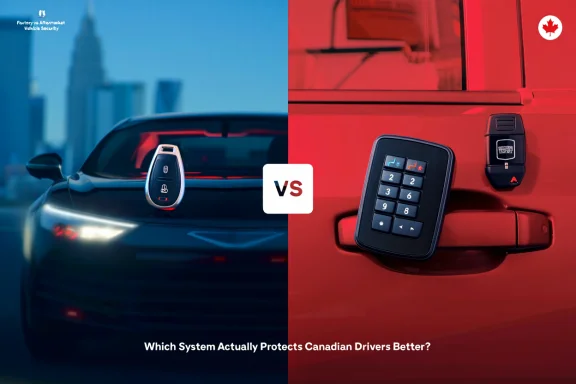
Your brand-new Honda sits in a Mississauga driveway with factory immobilizer technology that Honda claims makes theft “virtually impossible.” Three blocks away, a 15-year-old Toyota with a professionally installed aftermarket alarm system remains untouched while newer vehicles disappear nightly. What’s going on here?
The reality of vehicle security in Canada is more complex than manufacturer marketing suggests. While factory systems excel at preventing traditional hot-wiring, modern thieves have evolved sophisticated techniques that exploit the very technologies designed to stop them. Meanwhile, layered aftermarket systems create multiple barriers that often prove more effective against real-world theft methods.
Statistics Canada data shows vehicle theft rates climbing across major Canadian cities, with newer vehicles increasingly targeted despite advanced factory security. Understanding the strengths and limitations of both factory and aftermarket approaches helps Canadian drivers make informed protection decisions that actually work against today’s theft threats.
Factory Security Systems: Built-In Protection Analysis
Immobilizer Technology: The Foundation
Every vehicle sold in Canada since 2007 includes factory immobilizer systems that prevent engine starting without the correct transponder key. These systems integrate deeply with engine management computers, creating what appears to be impenetrable security.
Factory Immobilizer Components:
- Encrypted transponder chips in keys or fobs
- Antenna rings around ignition cylinders
- Engine control module integration
- Anti-theft indicator lights
- Rolling code encryption (in newer systems)
OEM Security Strengths
Factory systems benefit from complete vehicle integration, using existing wiring harnesses, control modules, and diagnostic systems. This integration provides seamless operation and typically includes warranty coverage for security-related components.
Key Factory System Advantages:
- Deep integration with vehicle electronics
- Manufacturer warranty and service support
- No additional key fobs or remotes to manage
- Designed specifically for each vehicle model
- Updates available through dealer service departments
Factory System Limitations
Despite sophisticated technology, factory security systems focus almost exclusively on preventing unauthorized starting while providing minimal protection against other forms of theft and vandalism.
Notable Factory System Gaps:
- No protection for vehicle contents or components
- Limited deterrent value (silent operation)
- Vulnerability to sophisticated theft techniques
- No remote monitoring or alert capabilities
- Minimal protection against break-ins or vandalism
Aftermarket Security Systems: Layered Protection Approach
Multi-Layer Defense Strategy
Aftermarket security systems typically employ multiple detection methods and response mechanisms, creating numerous barriers that thieves must overcome to succeed. This layered approach often proves more effective than single-point factory protection.
Typical Aftermarket Components:
- Shock and vibration sensors
- Door, hood, and trunk protection
- Glass break detection
- Proximity sensors for approach detection
- Audible alarms and visual deterrents
- Remote notification systems
Active vs. Passive Security Features
Unlike factory systems that operate passively, aftermarket security actively monitors vehicle surroundings and responds to threats with immediate alerts and deterrent measures.
Active Protection Elements:
- Immediate audible response to attempted break-ins
- Visual deterrents (flashing lights, LED indicators)
- Remote owner notification of security breaches
- Smartphone integration for real-time monitoring
- GPS tracking for theft recovery
Customization for Canadian Conditions
Aftermarket systems can be tailored to specific Canadian environments and threat levels. Urban installations might emphasize silent operation and smartphone alerts, while rural systems focus on loud deterrents and extended range communication.
Real-World Theft Scenarios: How Systems Perform
Professional Theft Operations
Modern vehicle theft increasingly involves organized groups using sophisticated techniques that specifically target factory security weaknesses. These operations often bypass immobilizers entirely through key cloning, CAN bus attacks, or tow truck theft methods.
Common Professional Theft Methods:
- Key fob signal amplification and relay attacks
- OBD port programming to create new keys
- Tow truck theft bypassing all electronic security
- Signal jamming preventing alarm activation
- Bump key attacks on older vehicles
Opportunistic Theft and Break-Ins
While professional thieves target specific high-value vehicles, opportunistic theft focuses on easy targets with minimal security. Aftermarket systems excel at deterring these crimes through visible and audible deterrents.
Opportunistic Crime Patterns:
- Quick break-ins for visible valuables
- Theft of easily removable components
- Vandalism and mischief
- Crimes of opportunity in parking lots
- Youth-related vehicle tampering
Regional Theft Patterns Across Canada
Urban Crime Concentrations
Toronto, Vancouver, and Montreal experience concentrated vehicle crime with professional theft rings targeting specific makes and models for export or parts sales. These operations often defeat factory security through technological means.
Urban Theft Characteristics:
- Organized professional operations
- Technology-based security defeats
- High-value vehicle targeting
- Export-oriented theft rings
- Sophisticated key cloning operations
Rural and Suburban Patterns
Smaller Canadian communities face different theft patterns, often involving opportunistic crimes and recreational vehicle targeting. Aftermarket systems provide better protection against these threats through deterrent value and content protection.
Rural Crime Considerations:
- Longer police response times increase deterrent value
- Recreational vehicle and equipment theft
- Seasonal cottage and cabin break-ins
- Agricultural equipment and tool theft
- Remote area vulnerability
Cost-Benefit Analysis: Protection Per Dollar
Factory Security Costs
Factory security comes “free” with new vehicle purchases, but this cost is built into the purchase price. Replacement keys typically cost $200-500, and system failures often require expensive dealer diagnostics and programming.
Hidden Factory Security Costs:
- Premium built into vehicle purchase price
- Expensive key replacement and programming
- Dealer-only service and diagnostic requirements
- Limited upgrade or customization options
- No protection for aftermarket accessories
Aftermarket Investment Analysis
Professional aftermarket security systems range from $400-2,000 installed, providing measurably better protection against multiple threat types while offering superior value per dollar of protection.
Aftermarket Value Propositions:
- Immediate protection for existing vehicles
- Customizable protection levels and features
- Independent service and parts availability
- Insurance discount eligibility
- Enhanced resale value for properly installed systems
Integration and Compatibility Considerations
Working with Factory Systems
Modern aftermarket security doesn’t replace factory immobilizers but works alongside them, creating multiple protection layers. Professional installation ensures compatibility and prevents conflicts between systems.
Successful Integration Requirements:
- Bypass modules that maintain factory security functions
- Proper interface with vehicle communication networks
- Preservation of warranty-covered factory systems
- Testing to ensure reliable operation
- Documentation for warranty protection
Vehicle-Specific Challenges
Some Canadian-market vehicles present unique integration challenges based on manufacturer-specific security implementations and Canadian regulatory requirements.
Complex Integration Scenarios:
- Luxury vehicles with extensive factory security
- Vehicles with keyless ignition systems
- Models with integrated telematics
- Fleet vehicles with tracking systems
- Vehicles with advanced driver assistance systems
Professional Installation: The Canadian Advantage
Certified Installer Benefits
Ontario’s Automotive Electronic Accessory Technician licensing ensures professional standards, while certified installers across Canada provide expertise that maximizes system effectiveness and reliability.
Professional Installation Advantages:
- Knowledge of vehicle-specific integration requirements
- Access to professional-grade equipment and bypass modules
- Warranty protection for both installation and components
- Ongoing service and support availability
- Compliance with provincial regulations and insurance requirements
Installation Quality Impact on Performance
Poor installation can render even excellent security systems ineffective, while professional installation maximizes the protection potential of modest systems. This quality difference becomes critical in Canadian conditions where reliability is essential.
Insurance and Legal Implications
Canadian Insurance Recognition
Most Canadian insurers recognize professionally installed aftermarket security systems for discount purposes, with savings typically ranging from 5-15% annually. Some insurers specifically require aftermarket security for high-risk vehicles or areas.
Insurance Considerations:
- Professional installation often required for discounts
- Documentation requirements vary by insurer
- Comprehensive coverage may extend to aftermarket equipment
- Anti-theft systems may reduce deductibles
- Some policies require specific system certifications
Legal Requirements and Restrictions
While Canada generally permits aftermarket security systems, some municipalities restrict certain features like loud sirens in residential areas or specific operating hours for audible alarms.
Making the Right Choice for Your Situation
Threat Assessment for Your Area
Evaluate local crime patterns, parking situations, and vehicle usage to determine optimal security approaches. Toronto condo owners face different threats than Calgary suburban residents or rural Saskatchewan farmers.
Risk Evaluation Factors:
- Local vehicle theft and break-in statistics
- Typical parking environments (garage, street, workplace)
- Vehicle value and theft target probability
- Personal valuables and equipment regularly transported
- Insurance requirements and discount opportunities
Budget and Feature Prioritization
Determine which security features provide the most value for your specific situation and budget constraints. Sometimes basic aftermarket systems outperform expensive factory options for actual protection needs.
Budget Planning Considerations:
- Initial system and installation costs
- Ongoing maintenance and service expenses
- Insurance savings and discounts available
- Potential resale value improvements
- Cost of inadequate protection (theft losses)
Technology Evolution: Future Security Trends
Smart Security Integration
Emerging security systems integrate with smartphone apps, home automation, and even smart city infrastructure to provide comprehensive protection that extends beyond traditional vehicle security.
Artificial Intelligence Applications
AI-powered security systems learn normal usage patterns and identify suspicious activities more accurately than traditional sensor-based systems, reducing false alarms while improving protection effectiveness.
Conclusion
The factory versus aftermarket security debate isn’t about choosing one or the other – it’s about understanding how different approaches protect against different threats. Factory immobilizers excel at preventing traditional theft methods but offer little protection against modern professional techniques or opportunistic crimes.
Aftermarket systems provide comprehensive protection against multiple threat types while offering customization options that address specific Canadian challenges like extreme weather, varied parking environments, and regional crime patterns. The most effective approach often combines factory and aftermarket systems into layered protection that addresses all potential vulnerabilities.
For most Canadian drivers, professional aftermarket security systems deliver superior protection value compared to relying solely on factory systems. The combination of theft deterrence, content protection, and insurance benefits typically justifies the investment within 2-3 years through avoided losses and insurance savings.
The decision ultimately depends on your specific risk profile, budget, and protection priorities. Whether you choose to supplement factory security or rely entirely on aftermarket systems, professional installation and regular maintenance ensure optimal protection performance.
Ready to evaluate security options for your specific situation? Contact certified automotive security professionals in your area for personalized threat assessment and system recommendations that provide optimal protection for Canadian driving conditions.